Port Townsend, WA · Jefferson County
Basement Water Damage Restoration in Port Townsend, WABasement Floor Water Removal & Basement Sewer Backup Cleanup
Get basement water damage restoration in Port Townsend for basement floor water removal, basement mold prevention and basement drying services.
Answered 24/7
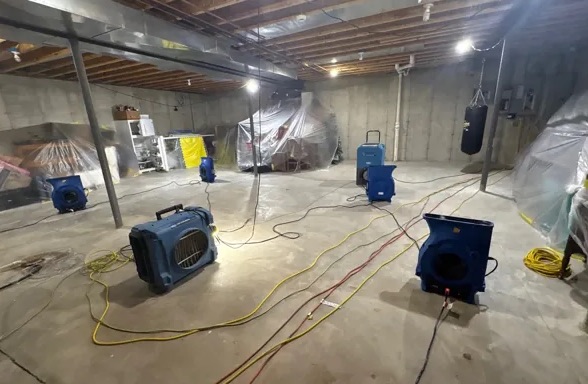
Expert Basement Water Damage Restoration Serving Port Townsend
Basements collect water from every direction: rain seeping through walls, groundwater pushing up through the slab, sewage backing up through floor drains and pipes bursting overhead. In Port Townsend, any of these can leave inches of water on the floor.
In Port Townsend, Oak Harbor and Sequim, many finished basements hide old moisture behind drywall and flooring. The pros find the water and dry the space before more damage sets in.
Basement Water Damage Restoration Services in Port Townsend
Basement Floor Water Removal
Water on a concrete floor is squeegeed and extracted, and floor coverings such as carpet, vinyl or laminate are lifted to dry the slab.
Basement Sewer Backup Cleanup
After a sewer backup, cleanup and disinfection come before drying, so contaminated surfaces are not left in place.
Basement Water Extraction
Extraction starts at the lowest point, often near the floor drain or sump, and works outward until no pooled water remains.
Basement Drying Services
Drying a basement takes longer than drying an upper floor because the air is cool and the concrete holds moisture.
Emergency Basement Flood Cleanup
Help is available any hour when water is rising in the basement from a burst pipe, a sewer backup or heavy rain.
Warning Signs You Need Basement Water Damage Restoration
Standing Water in the Basement
Any standing water on the basement floor needs pumping right away, before it soaks walls and framing.
Wet or Stained Basement Walls
Dark, wet patches or tide lines on basement walls show where water seeped in or wicked up.
Sewage Odors or Backups
Sewage smells or water coming up through a floor drain mean the sewer line is backing up.
Rusted Appliances or Pipes
Rust on the water heater, furnace base or pipes points to repeated moisture or past flooding.
How Basement Water Damage Restoration Works in Port Townsend
Step 1: Source Control and Extraction
The pipe is shut off, the sump restarted or the backup stopped, then the water is pumped out.
Step 2: Structural Drying Setup
Lower drywall is removed where soaked, and equipment is placed to dry wall cavities and the slab.
Step 3: Contaminant Removal
Materials touched by sewage or dirty water are removed and hard surfaces are cleaned and disinfected.
Step 4: Monitoring and Completion
Daily readings track drying until every material is normal, then equipment is removed.
What Causes Basement Water Damage Restoration in Port Townsend
Faulty Basement Waterproofing
Old or failed waterproofing on foundation walls lets water through during wet weather.
Failed or Clogged Drain Tile
Clogged or collapsed drain tile around the foundation lets water build up against the walls.
Sump Pump Mechanical Failure
A sump pump that fails, loses power or is too small lets groundwater rise into the basement.
Sewer Line Backups
A blocked or overloaded sewer line pushes wastewater up through basement drains and toilets.
Basement Water Damage Restoration for All Properties in Port Townsend
Residential Basement Water Damage Restoration
In homes, a flooded basement often means damaged carpet, drywall, a furnace or water heater and stored belongings. Water is pumped out, contents are moved and the space is dried.
Commercial Basement Water Damage Restoration
In commercial buildings, basements hold mechanical rooms, storage and sometimes offices. Water is removed and equipment areas are dried so systems can be checked and restarted.
Basement Water Damage Restoration: Professional Help vs. Doing It Yourself in Port Townsend
Keeping gutters and downspouts clear and checking water heater and washer hoses are good DIY steps before storm season. Once water is on the floor, call (253) 216-4287.
What Influences Basement Water Damage Restoration Cost in Port Townsend
A basement pumped and dried right away in Port Townsend usually costs less than one left wet for days, when more drywall and flooring are lost.
Dehumidification Needs
Large dehumidifiers may need to run longer in below-grade spaces than in upper floors.
Access Complexity
Narrow stairs, low ceilings and stored contents can make the work slower.
Material Saturation
Finished basements with carpet, drywall and insulation take more removal work than bare concrete.
Does Insurance Cover Basement Water Damage Restoration?
Flood damage from rising outside water usually needs flood insurance. Water from inside the home, like a broken pipe, is more often covered.
Advantages of Hiring Local Pros in Port Townsend for Basement Water Damage Restoration
Detailed Documentation
Photos, readings and drying logs are kept to support your insurance claim.
Industry Drying Standards
Drying follows industry water damage standards, with readings taken at every visit.
Structural Integrity Assessment
Walls, stairs and framing are checked for damage before work begins in the basement.
24/7 Emergency Basement Water Damage Restoration in Port Townsend
Water rising in your basement in Port Townsend? Shut off power to the basement if it is safe, move what you can and call (253) 216-4287. Help is available 24/7.
Call Now (253) 216-4287Local Basement Water Damage Restoration Coverage: Port Townsend and Beyond
Besides Port Townsend, local water removal pros handle basement pumping, drying and dehumidification in nearby Oak Harbor and Sequim.
- Basement Water Damage Restoration in Oak Harbor
- Basement Water Damage Restoration in Sequim
- Basement Water Damage Restoration in Poulsbo
- Basement Water Damage Restoration in Edmonds
- Basement Water Damage Restoration in Anacortes
- Basement Water Damage Restoration in Marysville
- Basement Water Damage Restoration in Everett
- Basement Water Damage Restoration in Picnic Point
- Emergency Damage Restoration in 98368
- Storm Damage Restoration in 98368
- Water Damage Restoration in 98368
- Water Extraction Service in 98368
- Water Leak Detection in 98368
- Water Removal Service in 98368
Basement Water Damage Restoration Common Questions Answered
Is basement floor water removal different from carpet extraction?
Yes. Bare concrete is squeegeed and dried, while carpet and pad need extraction, and the pad is usually replaced.
What is the priority during emergency basement flood cleanup?
Safety first, especially electrical hazards, then stopping the source and pumping out the water as quickly as possible.
Why is dehumidification so important after basement water removal?
Basements hold moisture in the air and concrete. Without dehumidifiers, walls and framing stay damp long after the water is gone.
What does below-grade moisture removal include beyond pumping?
Extracting carpet and pad, opening wet walls, running air movers and dehumidifiers, and checking readings until dry.
What causes the most common below-grade leaks in homes?
Sump pump failures, foundation cracks, clogged drain tile, sewer backups and burst pipes in the basement ceiling.