Parkland, WA · Pierce County
Basement Water Damage Restoration in Parkland, WABasement Floor Water Removal & Basement Wall Drying
Basement Water Damage Restoration in Parkland includes emergency basement flood cleanup, basement sewer backup cleanup and basement wall drying.
Answered 24/7
Fast Basement Water Damage Restoration for Parkland Homes
Sewage backups are one of the most common basement problems in Parkland. Water coming up through a floor drain or basement toilet carries bacteria and needs a different cleanup than clean water.
In Parkland, Lakewood, Spanaway and Frederickson, many finished basements hide old moisture behind drywall and flooring. The pros find the water and dry the space before more damage sets in.
Basement Water Damage Restoration Solutions Available in Parkland
Basement Floor Water Removal
A slab can look dry on top while still holding water. Moisture readings show when it is ready for new flooring.
Basement Wall Drying
Concrete and block walls are dried with directed airflow and dehumidifiers, and checked with meters until readings drop.
Basement Sewer Backup Cleanup
After a sewer backup, cleanup and disinfection come before drying, so contaminated surfaces are not left in place.
Basement Water Extraction
Extraction starts at the lowest point, often near the floor drain or sump, and works outward until no pooled water remains.
Basement Drying Services
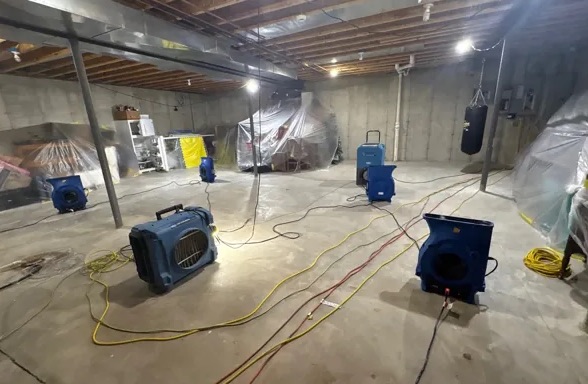
Air movers and dehumidifiers are placed to dry walls, framing and the slab. Below-grade rooms dry slowly, so readings are taken daily.
Indicators for Basement Water Damage Restoration in Parkland
Damp or Musty Odors
A damp, earthy or musty smell in the basement often means hidden moisture in walls, carpet or the slab.
Sump Pump Failure or Overflow
A sump pump that runs constantly, fails to start or lets the pit overflow puts the basement at risk.
Efflorescence on Concrete Walls
White, chalky deposits on concrete walls mean water is moving through the concrete and leaving minerals behind.
High Humidity Levels Below-Grade
A basement that stays damp and clammy even on dry days has a moisture source that needs attention.
How Basement Water Damage Restoration Works in Parkland
Step 1: Floodwater Pump-Out
Submersible pumps remove deep water, and electrical hazards are checked before anyone walks in it.
Step 2: Deep Moisture Extraction
Extractors pull water from carpet, pad and the concrete floor after the deep water is gone.
Step 3: Air Circulation and Drying
Air movers keep dry air moving across walls and floors throughout the basement.
Step 4: Dehumidification and Verification
Dehumidifiers run until humidity and material readings confirm the basement is dry.
Common Causes of Water Damage in Parkland
Plumbing Pipe Bursts or Leaks
Supply lines and drain pipes in basement ceilings can crack or burst onto the floor below.
Sewer Line Backups
A blocked or overloaded sewer line pushes wastewater up through basement drains and toilets.
Sump Pump Mechanical Failure
A sump pump that fails, loses power or is too small lets groundwater rise into the basement.
Water Heater or Appliance Leaks
Water heaters, washers and utility sinks in the basement can leak or fail without warning.
Basement Water Damage Restoration for All Properties in Parkland
Residential Basement Water Damage Restoration
Homeowners with older basements may have seepage that returns with each storm. Drying fixes the current damage, and the source is noted for a waterproofing contractor.
Commercial Basement Water Damage Restoration
Apartment and condo buildings often have shared basements with laundry and storage. Each area is extracted, dried and recorded for the building manager.
When to DIY and When to Call the Pros for Basement Water Damage Restoration
If a small leak left a puddle on bare concrete, a wet vac and a dehumidifier may be enough. Call local restoration pros if water reached drywall, carpet or framing, or if it came from a sewer drain.
What Influences Basement Water Damage Restoration Cost in Parkland
Waterproofing or sump pump replacement is a separate cost from water removal and drying. In Parkland, both may be needed to prevent a repeat.
Water Category
Clean water costs less to handle than sewage, which needs protective gear, removal and disinfection.
Access Complexity
Narrow stairs, low ceilings and stored contents can make the work slower.
Material Saturation
Finished basements with carpet, drywall and insulation take more removal work than bare concrete.
Does Insurance Cover Basement Water Damage Restoration?
Many homeowner policies cover sudden basement water from a burst pipe, but not seepage or groundwater. Sewer backup coverage is often a separate add-on, so check your policy.
Why Choose Local Pros for Basement Water Damage Restoration in Parkland
Industrial-Grade Equipment
Pumps, extractors and large dehumidifiers remove water much faster than household wet vacs and fans.
Advanced Moisture Detection
Moisture meters and thermal cameras find water in walls and slabs that looks dry.
Detailed Documentation
Photos, readings and drying logs are kept to support your insurance claim.
Parkland Emergency Basement Water Damage Restoration Response
Water rising in your basement in Parkland? Shut off power to the basement if it is safe, move what you can and call (253) 216-4287. Help is available 24/7.
Call Now (253) 216-4287Local Basement Water Damage Restoration Coverage: Parkland and Beyond
Basement water removal and drying also cover homes and buildings in Lakewood, Spanaway and Frederickson, close to Parkland, day or night.
- Basement Water Damage Restoration in Lakewood
- Basement Water Damage Restoration in Spanaway
- Basement Water Damage Restoration in Frederickson
- Basement Water Damage Restoration in Tacoma
- Basement Water Damage Restoration in Fircrest
- Basement Water Damage Restoration in Fife
- Basement Water Damage Restoration in Steilacoom
- Basement Water Damage Restoration in University Place
Basement Water Damage Restoration FAQs
How is basement sewer backup cleanup different from regular flooding?
Sewage carries bacteria, so it needs protective gear, removal of porous materials and disinfection before drying.
What is the priority during emergency basement flood cleanup?
Safety first, especially electrical hazards, then stopping the source and pumping out the water as quickly as possible.
What causes the most common below-grade leaks in homes?
Sump pump failures, foundation cracks, clogged drain tile, sewer backups and burst pipes in the basement ceiling.
Does basement mold prevention need special steps after flooding?
Fast drying is the main step. Wood and concrete that stayed wet can be treated with an antimicrobial once dry.
What is involved in basement water damage restoration?
Pumping out water, removing soaked materials, cleaning contaminated areas, drying walls, framing and concrete, and dehumidifying until readings are normal.