Mill Creek, WA · Snohomish County
Basement Water Removal in Mill Creek, WABasement Moisture Inspection & Sump Pump Failure Water Cleanup
Basement Water Removal in Mill Creek runs from basement water pump out and basement drying services to basement dehumidification.
Answered 24/7
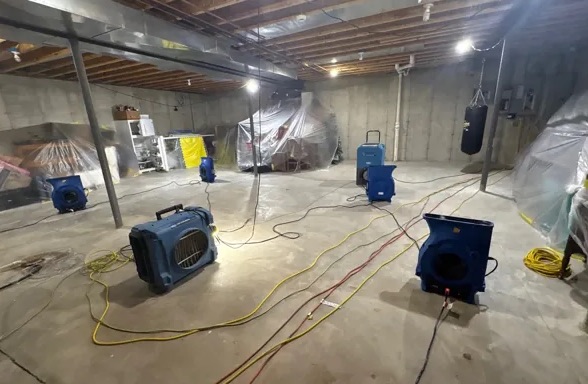
Reliable Basement Water Removal Near Mill Creek, Washington
A basement that looks dry a day after a flood in Mill Creek can still hold a lot of water in the slab, the bottom of the walls and under flooring. That hidden water causes the musty smell many basements have.
Homeowners in Mill Creek can call (253) 216-4287 day or night when the basement is taking on water. Service also covers Silver Firs, Lynnwood and Picnic Point, with the same pumping and drying steps.
Basement Water Removal Services in Mill Creek
Basement Moisture Inspection
Moisture meters and thermal cameras check walls, floors and the slab for water that is not visible, including behind finished walls.
Sump Pump Failure Water Cleanup
When a sump pump stops, groundwater spreads across the floor. The water is pumped out and the floor and lower walls are extracted.
Basement Drying Services
Equipment stays until the basement reads dry, not just until it looks dry. Removing it early lets dampness return.
Basement Dehumidification
After drying, a household dehumidifier may still be needed to keep basement humidity in a healthy range.
Basement Wall Drying
Opening the bottom of finished walls lets air reach the studs and sill plate, which otherwise stay wet behind the drywall.
When to Call for Basement Water Removal in Mill Creek
Musty Odors and Mold Smell
A musty or damp smell in the basement points to wet materials hidden somewhere in the space.
Warped or Buckling Flooring
Flooring that buckles, lifts or feels spongy has water trapped between it and the slab.
Mold or Mildew
Dark spots on drywall, framing or stored items mean the area has stayed wet for days.
Sump Pump Failure or Overflow
A sump pit that is full, overflowing or has a pump that will not start means water is about to spread.
How Basement Water Removal Works in Mill Creek
Step 1: Emergency Water Extraction
Power is made safe, then pumps and extractors remove standing water from the basement floor.
Step 2: Detailed Moisture Inspection
Meters map wet walls, framing and slab areas, including behind finished walls and under flooring.
Step 3: Drying and Dehumidification
Air movers and large dehumidifiers run continuously, with readings checked every day.
Step 4: Final Verification and Monitoring
Readings are compared to dry areas, and equipment is removed only when the basement tests dry.
What Causes Water Damage in Basements
Plumbing Leaks or Pipe Bursts
Supply lines, drain pipes and water heaters in the basement can leak or burst onto the floor.
Improper Landscape Grading
Soil that slopes toward the house directs rainwater straight to the basement walls.
Sewer Line Backups and Blockages
A blocked sewer line can push wastewater up through basement floor drains and toilets.
Foundation Cracks and Seepage
Cracks in foundation walls and the slab let groundwater seep in during wet weather.
Residential and Commercial Basement Water Removal in Mill Creek
Residential Basement Water Removal
Older homes may see seepage with every heavy storm. Water removal handles the current damage, and the entry point is noted for a waterproofing contractor.
Commercial Basement Water Removal
Multi-unit buildings with shared basements need each storage and laundry area pumped, dried and documented for the property manager.
When to Hire Local Pros for Basement Water Removal
A small puddle on bare concrete can be handled with a wet vac, towels and a dehumidifier. Call local water extraction experts if water reached carpet, drywall or framing, or covers much of the floor.
Understanding Basement Water Removal Pricing
A basement pumped out the same day in Mill Creek usually needs less drywall and flooring replaced than one left wet for days.
Additional Services
Antimicrobial treatment, contents cleaning and repairs after drying add to the cost.
Water Depth and Volume
Deeper water takes more pumping time and usually means more materials got wet.
Contamination Level
Sewage or dirty water needs protective gear, removal and disinfection, which costs more.
Does Insurance Cover Basement Water Removal?
Ask your adjuster early how your policy treats seepage and sewer backups, since many policies limit or exclude both kinds of water.
Why Choose Local Pros for Basement Water Removal in Mill Creek
Industry Drying Standards
Water removal and drying follow industry water damage standards, with readings at every visit.
Advanced Drying Equipment
Pumps, extractors and large dehumidifiers remove water much faster than household tools.
Methodical Water Removal Process
Water is removed in a set order: pump-out, extraction, removal of soaked materials, then drying.
24/7 Emergency Basement Water Removal in Mill Creek
Water still rising in the basement? Call (253) 216-4287 now for basement water removal in Mill Creek before the water reaches finished rooms and stored belongings.
Call Now (253) 216-4287Communities Served for Basement Water Removal
Need basement water removal outside Mill Creek? Service also covers Silver Firs, Lynnwood and Picnic Point, including emergency help during storms.
- Basement Water Removal in Silver Firs
- Basement Water Removal in Lynnwood
- Basement Water Removal in Picnic Point
- Basement Water Removal in Brier
- Basement Water Removal in Mountlake Terrace
- Basement Water Removal in Everett
- Basement Water Removal in Bothell
- Basement Water Removal in Snohomish
- Emergency Damage Restoration in 98082
- Storm Damage Restoration in 98082
- Water Damage Restoration in 98082
- Water Extraction Service in 98082
- Water Leak Detection in 98082
- Water Removal Service in 98082
Common Basement Water Removal Questions Answered
What is involved in basement water removal?
Making power safe, pumping out standing water, extracting floors and carpet, removing soaked materials and dehumidifying until dry.
What is involved in basement leak cleanup?
Stopping the leak, extracting the water, drying the floor and walls and checking for hidden moisture under flooring.
How long does basement drying take?
Often several days or longer, because concrete and cool basement air hold moisture. Daily readings show when it is done.
How does a basement moisture inspection work?
Moisture meters and thermal cameras check walls, floors and the slab, including behind finished walls and under flooring.
How is basement wall drying done?
Wet drywall is cut back, insulation removed and directed airflow and dehumidifiers dry the studs and masonry.