East Hill-Meridian, WA · King County
Basement Water Removal in East Hill-Meridian, WABasement Floor Water Damage & Basement Moisture Inspection
Basement Water Removal in East Hill-Meridian includes basement water pump out, basement drying services and basement moisture inspection.
Answered 24/7
Expert Basement Water Removal in East Hill-Meridian, Fairwood, Covington and Renton
In East Hill-Meridian, a burst pipe or heavy rain can let water rise fast in a basement. The water usually spreads from the low point across the whole floor and into finished rooms.
Homes in East Hill-Meridian and nearby Fairwood, Covington and Renton with basements face storm seepage, sewer backups and plumbing leaks. Help with basement water removal covers pump-out, wall and floor drying and dehumidification.
Comprehensive Basement Water Removal Solutions
Basement Floor Water Damage
Flooring that buckled or swelled is removed. Tile and sealed concrete can often be cleaned and dried in place.
Basement Moisture Inspection
Readings are recorded at each visit, giving you and your insurer a clear record of the drying.
Basement Water Pump Out
A pump-out removes standing water from the basement with submersible pumps, discharging it outside and away from the foundation.
Emergency Basement Flooding
Emergency response starts with making power safe, stopping the source if possible and pumping out the water.
Basement Drying Services
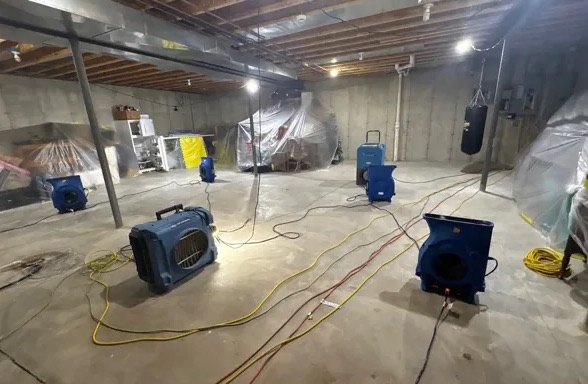
Equipment stays until the basement reads dry, not just until it looks dry. Removing it early lets dampness return.
Warning Signs You Need Basement Water Removal
Efflorescence on Concrete Walls
White, powdery deposits on concrete walls mean water is passing through the masonry.
Gurgling Sounds From Drains
Gurgling floor drains or slow drains can be an early sign of a sewer line problem.
Water Stains on Walls or Ceiling
Stains on lower walls or the ceiling below a bathroom or kitchen point to a leak.
Soggy or Wet Carpeting
Carpet that feels damp or smells sour is holding water in the pad against the concrete.
How Basement Water Removal Works in East Hill-Meridian
Step 1: Emergency Water Extraction
Power is made safe, then pumps and extractors remove standing water from the basement floor.
Step 2: Detailed Moisture Inspection
Meters map wet walls, framing and slab areas, including behind finished walls and under flooring.
Step 3: Drying and Dehumidification
Air movers and large dehumidifiers run continuously, with readings checked every day.
Step 4: Final Verification and Monitoring
Readings are compared to dry areas, and equipment is removed only when the basement tests dry.
Common Causes of Basement Flooding in East Hill-Meridian
Sewer Line Backups and Blockages
A blocked sewer line can push wastewater up through basement floor drains and toilets.
Foundation Cracks and Seepage
Cracks in foundation walls and the slab let groundwater seep in during wet weather.
Plumbing Leaks or Pipe Bursts
Supply lines, drain pipes and water heaters in the basement can leak or burst onto the floor.
Appliance Malfunctions and Overflows
Washers, utility sinks and water softeners in the basement can overflow or leak.
Professional Basement Water Removal for All Properties
Residential Basement Water Removal
Finished basements used as bedrooms or family rooms need careful moisture checks behind walls and under flooring, since that is where water hides.
Commercial Basement Water Removal
Businesses with below-grade storage need wet inventory moved out and documented. Drying is planned around daily operations wherever possible.
Basement Water Removal vs. DIY: When to Call the Pros
Water that came up through a floor drain may be sewage. Avoid touching it, keep children and pets away and call local water damage pros for cleanup with protective gear and disinfection.
Understanding Basement Water Removal Pricing
A basement pumped out the same day in East Hill-Meridian usually needs less drywall and flooring replaced than one left wet for days.
Drying Time Required
Basements dry slowly, and each extra day of equipment adds to the total.
Access and Complexity
Narrow stairs, low ceilings and crowded storage areas make the work slower and longer.
Additional Services
Antimicrobial treatment, contents cleaning and repairs after drying add to the cost.
Does Insurance Cover Basement Water Removal?
Photograph the water level, damaged belongings and appliances before cleanup, and keep receipts for emergency pumping and drying equipment for your adjuster.
Advantages of Local Basement Water Removal Experts
Focus on Drying Outcomes
Drying continues until readings are normal, not just until surfaces look dry.
Industry Drying Standards
Water removal and drying follow industry water damage standards, with readings at every visit.
Methodical Water Removal Process
Water is removed in a set order: pump-out, extraction, removal of soaked materials, then drying.
Fast Emergency Basement Water Removal Available 24/7
If water is near outlets, the furnace or the electrical panel, stay out of it. Call (253) 216-4287 for help in East Hill-Meridian and wait for power to be made safe.
Call Now (253) 216-4287Basement Water Removal Throughout King County
Help with basement water removal is also available in communities near East Hill-Meridian, including Fairwood, Covington and Renton, for flooded basements and sewer backups.
Common Basement Water Removal Questions Answered
What happens during basement moisture control?
Dehumidifiers and air movers keep humidity low while materials dry, and readings confirm when the space is normal.
Is a sump pump failure an emergency?
Yes, especially during rain. Groundwater can rise quickly once the pump stops, flooding the floor and finished rooms.
How is contaminated water handled in a basement?
With protective gear, containment, removal of porous materials and disinfection of hard surfaces before drying.
Why is basement dehumidification important after pumping?
Walls and concrete keep releasing moisture for days. Dehumidifiers remove it so the basement does not stay damp.
Does basement flood cleanup include mold prevention?
Fast drying is the main prevention. Wood and concrete that stayed wet can be treated with an antimicrobial once dry.